How to Choose a Helicopter Flight Over Barcelona
A helicopter flight over Barcelona is not like booking an ordinary city activity. The view changes with the route, the weather, the time of day and the amount of time spent in the air. Choosing well means looking beyond a single appealing photo and working out what kind of flight actually suits you. The process is simple when you take it in order and pay attention to a few practical details.
Start with the view you want
Before comparing options, decide what you want to see from the air. Barcelona has several distinct visual themes, and not every flight gives each one the same attention. Some routes focus on the coastline and the open sea. Some stay closer to the city grid, where the patterns of streets and blocks become surprisingly clear from above. Others include landmark buildings and the hills around the city.
Think about the image you have in mind. If your main interest is the sea, look for a route that follows the Barcelona coastline long enough for the beaches, marina and waterfront to register properly. If architecture matters most, check whether the flight route gives useful views of Sagrada Familia rather than a distant glimpse. If you like history and landscape together, Montjuïc Castle and the hillside can add depth to the experience.
This first step matters because route descriptions can sound similar while feeling quite different in practice. A short flight may cover a famous sight in passing, while a slightly longer one may give you time to take it in and photograph it. The right choice depends on whether you want a broad impression or a closer look at a few places.
Check what the flight route really includes
Once you know your priorities, read the route description carefully. Look for named places and the order in which they appear. A route that lists the Port of Barcelona, the waterfront and the city centre is likely to have a different character from one that turns out toward the sea and returns along the coast. Neither is automatically better. The question is whether the route matches what you expect to see.
Pay attention to wording such as panoramic views, city highlights, coastal flight or extended route. These phrases are useful, but they are most helpful when backed by specific places. Watch for vague descriptions that repeat the same idea without saying where the aircraft goes. If the route is described only in general terms, ask what areas are normally included and where the turns happen.
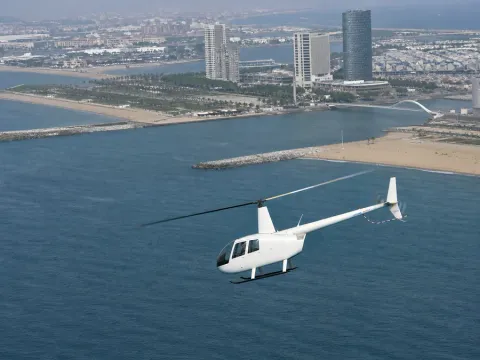
Also consider the direction of the flight. A route that runs along the coast can give a clean view of the water and city edge. A route over the urban grid can show the ordered layout of the city and the surrounding hills. Both can be memorable, but they suit different expectations. A clear route description helps you avoid feeling that the flight spent too long on the part you cared about least.
Understand flight duration in a practical way
Flight duration is easy to compare on paper and harder to judge in real life. A very short flight can feel intense and exciting, yet it may leave little time for relaxed looking or careful photos. A longer flight gives more breathing room, though it also asks more from your schedule and budget. The aim is not to choose the longest option by default, but to match the time in the air to your purpose.
For a first helicopter experience, a moderate flight often works well because it gives you time to settle, look around and recognise the main sights. If you are mainly seeking a dramatic overview of the coastline, a shorter route can still be satisfying when the weather is clear. If photography is central, extra time is valuable because light changes quickly and framing from the air takes a little practice.
Remember that flight duration is only one part of the visit. Check-in, safety briefing, boarding and time at the helipad all take place around the flight itself. When planning the rest of the day, allow space for those steps rather than treating the listed flight time as the whole appointment. This keeps the experience from feeling rushed before it even begins.
Compare the departure point and local convenience
The location of the helipad affects how easy the whole experience feels. A departure point near the area you are staying can reduce stress, especially if you are fitting the flight between other plans. A base farther away may still be worth choosing if the route is stronger, but it needs more thought about travel time and arrival margin.
Look at how you would reach the departure point and how much time you would need to get there without hurrying. Helicopter activities depend on precise timing, so arriving close to the scheduled slot is not ideal. Give yourself a cushion. If you are coming from another part of the city, consider traffic patterns and allow more time than you think you need.
Convenience also includes what happens before and after the flight. If you want to continue with a meal, a walk or another attraction, choose a departure point that fits naturally into the day. A flight over the city can be a strong centerpiece, but it sits better when the surrounding plan is calm. This is where a site such as helicoptertourbarcelona.com can be useful for comparing the practical side of the activity before you commit.
Read the booking terms before you decide
The next step is to look closely at the booking conditions. This is not the most exciting part, but it can prevent disappointment. Check what happens if weather affects the flight, whether rescheduling is allowed and how changes are handled. Wind, rain and low visibility can all influence flying plans, so flexibility is worth understanding in advance.
Also check the rules for passengers, baggage and arrival. Some activities have limits that are easy to miss when you focus on the view. Weight information may be requested for safety and balance. Clothing advice may matter because conditions at the helipad can feel different from the street. If the terms are unclear, ask before booking rather than assuming that every operator follows the same approach.
Payment conditions deserve the same attention. Look for clear information about deposits, cancellations and what is included in the quoted amount. Avoid relying on memory or a screenshot from elsewhere. The page you book should state the main terms in plain language, and any extra charges should be easy to identify. A good choice should feel straightforward at this stage, not confusing.
Judge the safety information with care
Safety is not a box to tick quickly. Read the information provided about the aircraft, the crew and the operating standards. You do not need technical knowledge to notice whether the details are presented clearly. Look for specific information rather than broad reassurance. A responsible provider should be able to explain the basic safety process without making it sound like an afterthought.
Listen carefully to the briefing on the day and follow instructions at the helipad. Move calmly, keep clear of the aircraft unless directed, and keep cameras and loose items under control. These are normal precautions for helicopter travel, not reasons to feel uneasy. They help everyone stay relaxed and focused.
If something seems unclear, ask. Questions about seat allocation, headsets, boarding order or what to do with bags are reasonable. Clear answers are a good sign. Vague answers, pressure to rush or a dismissive attitude toward basic questions are reasons to pause. The decision should leave you confident, not uncertain.
Think about timing and light
The same aerial view can feel different depending on when you fly. Midday light can be bright and sharp, with strong contrast on buildings and water. Earlier or later in the day, the city can look warmer and softer, with longer shadows and more texture. Neither option is wrong, but each changes what you notice.
If photography is a priority, think about the angle of the sun and the direction of the route. The city, sea and hills can appear quite different under clear midday light compared with softer evening tones. Weather also matters more than many people expect. A clear day with steady conditions usually gives better visibility than a hazy one, even if the route itself is excellent.
When comparing schedules, try to choose a time that suits both the light and your own energy. A flight early in the day may fit well before other plans. A later flight can feel like a memorable way to mark the end of a day out. The best slot is the one that gives you enough time to arrive calmly and enjoy the view without watching the clock.
Match the experience to the people going
Not every helicopter flight suits every group. Think about who is going and what they want from the experience. A couple looking for a memorable aerial view may prefer a calm route with strong landmarks. A family may place more weight on clear briefings, comfort and straightforward timing. A solo traveler interested in photography may care most about route detail and light.
Check whether the experience involves steep turns or a particularly dynamic flight profile if anyone in the group is sensitive to motion. Ask what the seating arrangement is like if one person wants a window view. These details may not appear in the main headline, yet they can shape how the flight feels. Planning around them leads to a better decision than choosing purely on the most dramatic description.
It also helps to agree on the purpose before booking. If the goal is a special occasion, you may want a route and timing that feel calm and generous. If the goal is simply to see Barcelona from a new angle, a focused flight may be enough. Clear expectations make it easier to judge which option offers the right balance.
Make the final comparison
By this point, the decision should be more focused. Compare the remaining options against the same points: the places in the route, the time in the air, the departure point, the booking terms and the clarity of the safety information. Avoid choosing only because one description uses more dramatic language. A well-matched flight is usually more satisfying than a flight that sounds impressive in general.
Read the final page once more before confirming. Check the date, time, passenger details and what is included. Keep a record of the confirmation and note the arrival instructions. If plans change, deal with it early rather than waiting until the day. A little care at this stage protects the experience and helps the flight begin smoothly.
Choosing a helicopter tour barcelona comes down to fit. Decide which sights matter, understand the route, allow enough time, check the terms and pay attention to safety details. When those pieces line up, the flight becomes more than a quick ride. It becomes a clear, memorable view of the city, the sea and the landmarks that give Barcelona its shape.
Ends · GETHELICOPTERTOURBARCELONATIPS